
Common Sprinkler System Problems in Maplewood Yards and What Causes Them
A head that stays down, a zone that will not shut off, a soggy corner of the lawn: here is what each one usually means, and when it is time to call us.
Free, no-obligation estimates. We answer or call back the same working day.
Common sprinkler system problems
The common problems are broken heads, leaks, low pressure, valve and wiring faults, and coverage that leaves some spots dry and others soggy.
Find what your system is doing below, see what usually causes it, and jump to the part of this page that explains it.
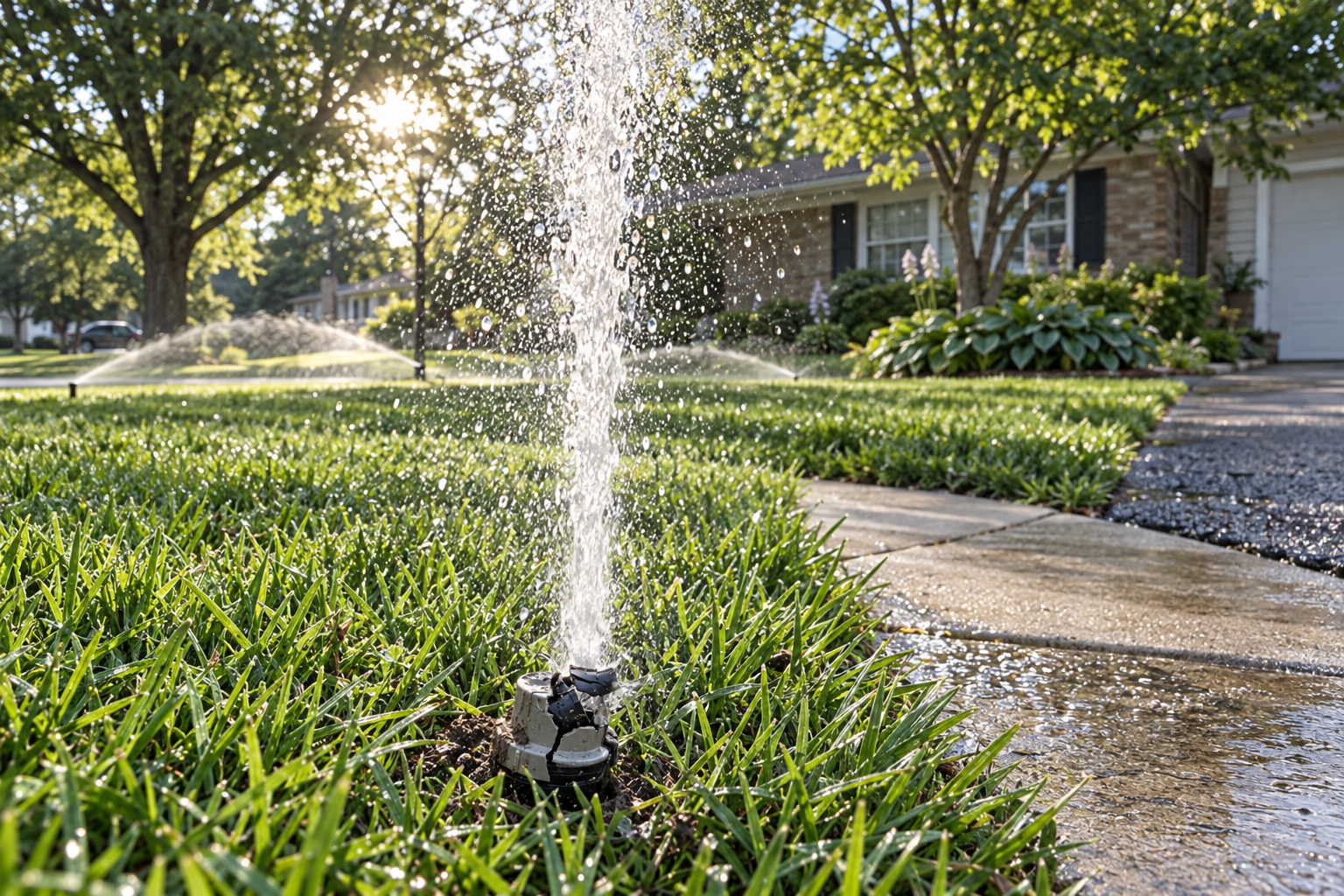
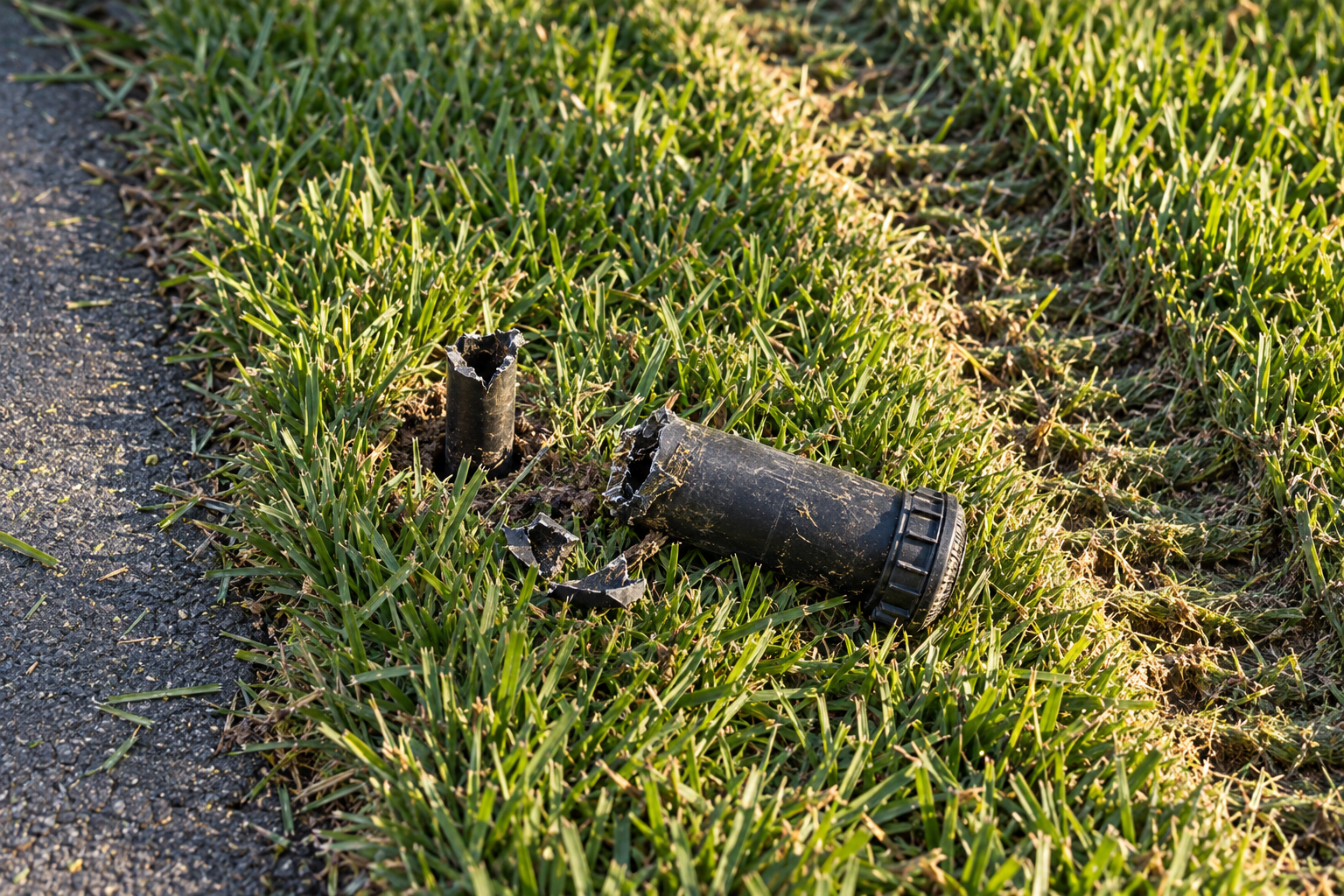
Broken heads. A head snapped off, cracked or shoved crooked, usually after a mower, a plow or a foot caught it.
Why heads breakLeaks. A wet strip that never dries, or water bubbling up through the turf while a zone runs, from a cracked pipe, a loose fitting or a puncture.
What causes leaksLow pressure. Heads that barely pop up or throw a short, weak spray, most often because a leak upstream is bleeding the zone's water away.
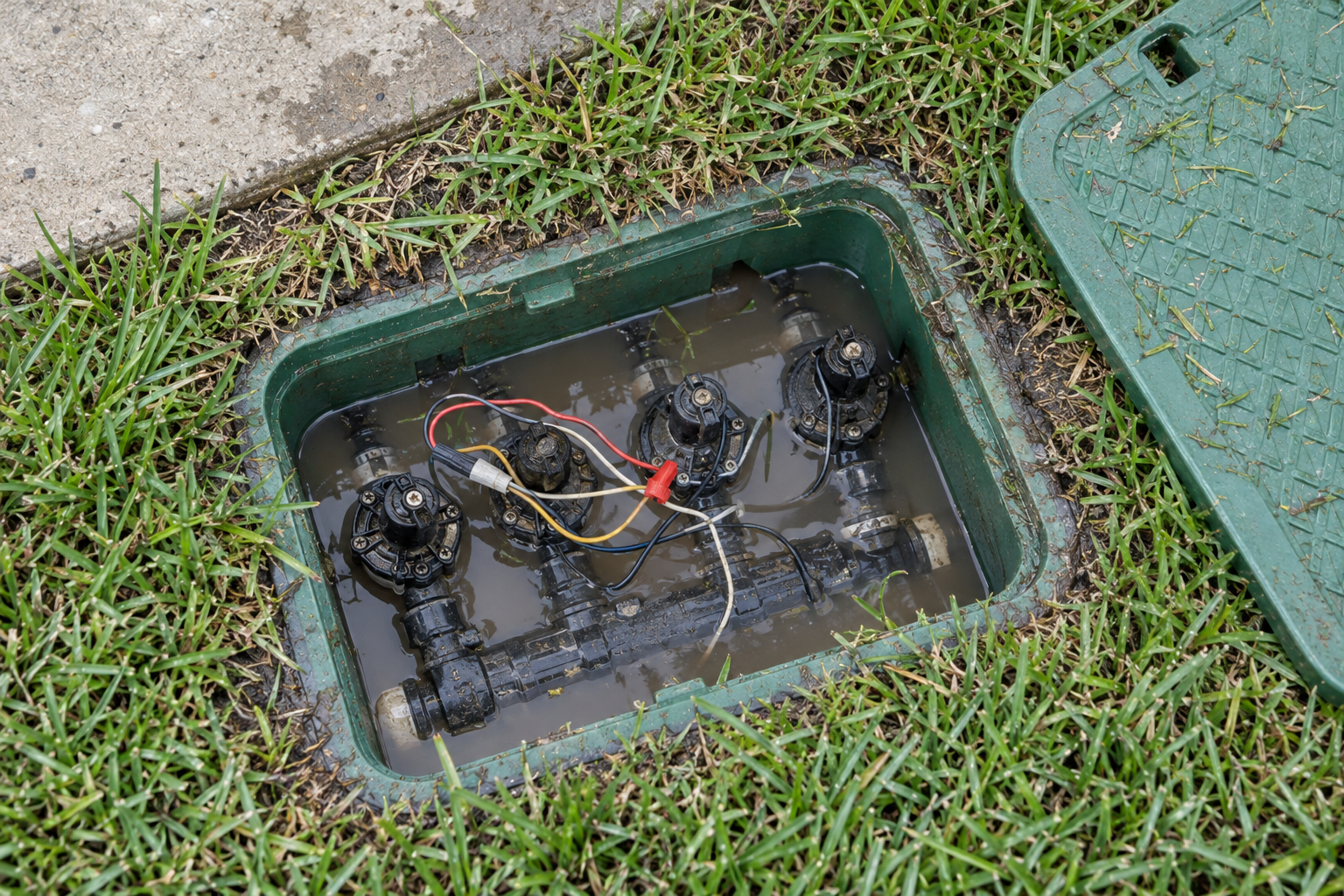
Leaks and pressureA "valve box" full of water. Lift the green lid at the lawn edge and find water standing over the valves inside, which points to a leak at the valves or the pipe beside them.
Leaks and pressureA zone that runs with the controller off. A section that keeps watering after the timer stops calling for it, the sign of a stuck valve or an electrical fault.
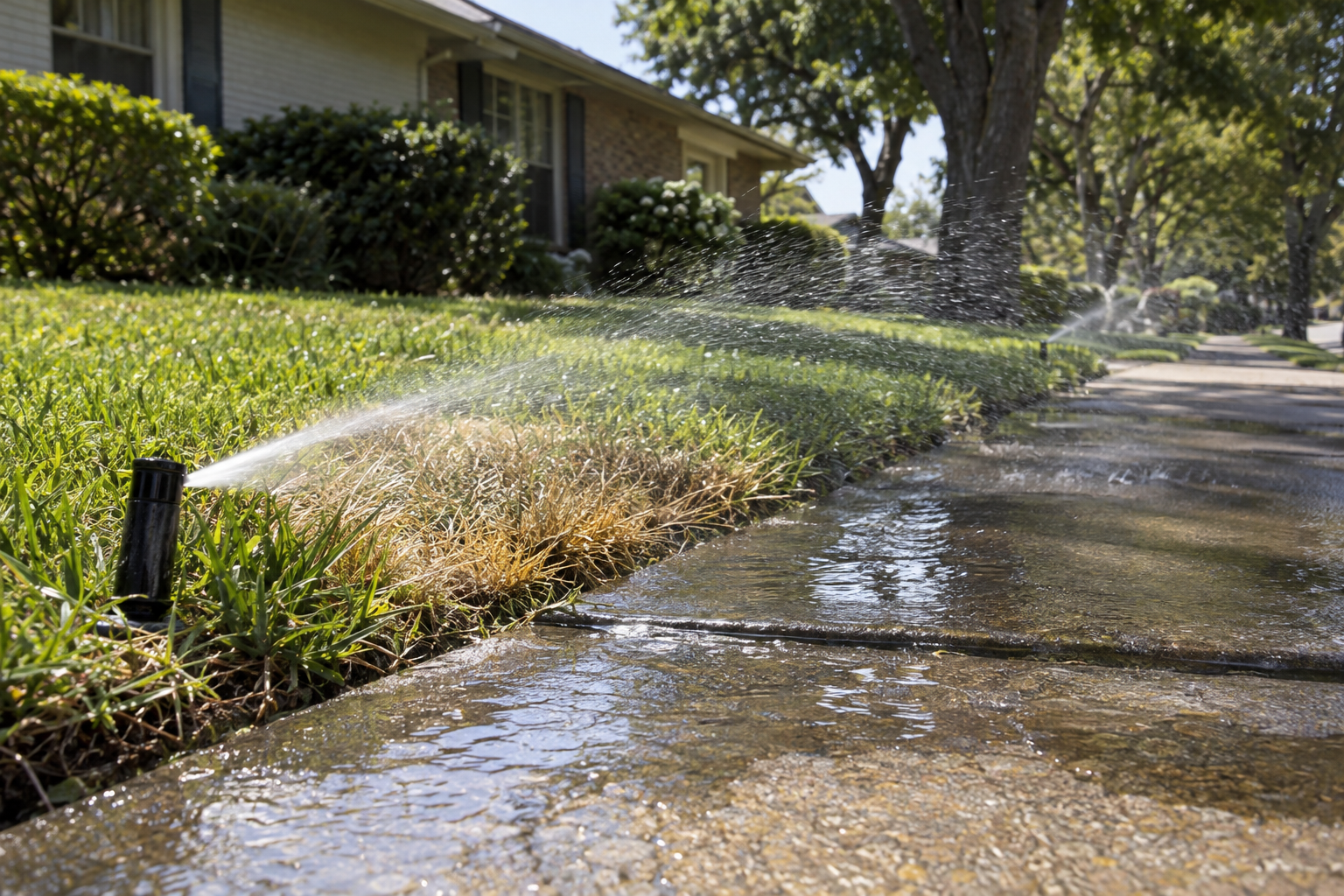
Zones that will not stopDry spots. Brown patches in an otherwise green lawn, where a head is clogged, stuck down or knocked off its aim.
What dry patches meanStanding water. Puddles or soggy ground that stay after a cycle, from a leak, poor drainage or a head watering the wrong spot.
What pooling water means
Not sure which one it is?
Call and describe what you see. The estimate is free, and we quote the whole job before we start.
Request Sprinkler RepairHeads that stay down, stick or spray the wrong way
Heads stop working because something hits them or because they wear out: mowers, plows and feet break them, and worn or clogged heads stick, stay down or spray the wrong way.
A head sits flush with the turf, so it takes every knock the lawn does. A mower wheel drops onto it, a plow catches the ones along the driveway, someone kicks one crossing the yard. The body cracks, the riser snaps, or the head gets pushed crooked and starts watering the siding.
Wear shows up in three ways, even on heads nobody has hit:
- It stays down. Grit in the body keeps the head from popping up, so it soaks the grass right around it and nothing past that.
- It sticks on. A head that will not drop back sits up where the next mowing catches it.
- It sprays the wrong way. A clogged or worn "nozzle", the tip that shapes the spray, throws water at the walk instead of the lawn.
Cleaning or re-aiming fixes some of these. A cracked body or a snapped riser takes a new head of the same type: a "rotor", the head that turns a stream across the big turf areas, or a spray head for the narrow strips.
Leaks, wet spots and low water pressure
Leaks come from cracked pipe, loose fittings and punctures from lawn equipment, and every leak lowers the pressure the rest of its zone gets.
Water takes the easiest way out. When a line cracks or a fitting works loose underground, part of the zone's flow goes into the soil instead of up through the heads, so the heads at the far end pop up weakly or not at all. That is why low pressure and a leak so often turn up together, and why we look for the leak before we blame the heads.
The signs are a wet strip that never dries, water bubbling up through the turf during a cycle, or a valve box with water standing inside. A leaking line also wastes water every time the zone runs, and you pay for all of it.
Pressure can be wrong the other way too. Spray heads run above the pressure they are built for waste water, which is why the EPA WaterSense: Spray Sprinkler Bodies guidance points to pressure-regulating bodies. Our pressure troubleshooting finds the cause either way, so the water spreads evenly across the zone again.
Water bubbling up, or a head snapped off?
Call and tell us what you see. We will find the leak or the broken part behind it, and quote the whole job before we start.
We answer the phone or call back the same working day.
Zones that will not start or will not stop
A zone that will not start, or will not stop, may have a stuck valve, a failed solenoid or a wiring fault between the controller and the valve.
A "zone" is a group of heads that share one valve, and the "controller", the box most people call the timer, decides when each one runs. When a section misbehaves, the fault is almost always in one of these three places:
-
A stuck valve
Grit or a worn seal can hold the valve open, so the zone keeps running with the controller off, or hold it shut so the zone never starts at all.
-
A failed solenoid
The solenoid is the small electric coil that pulls a valve open. When it burns out, nothing happens when that section's turn comes, and the grass it waters goes dry.
-
A wiring fault
Buried low-voltage wire carries each call out into the yard. A nick from a shovel or a corroded splice breaks it, and one electrical fault can take out a single zone or several.
Each of these is a repair we handle on a regular visit, the timer included, and we test before we replace anything.
Dry patches, soggy spots and high water bills
Dry patches and pooling water mean the water is landing in the wrong place: coverage is uneven, a line is leaking, or heads are watering the pavement, and each one raises the water bill.
This is how we read a lawn when we walk a zone:
- A dry patch beside a green one. A head there is clogged, stuck down or knocked off its aim, or the "head spacing" leaves a gap the spray never reaches. A badly installed system overwaters some spots and underwaters others.
- Soggy ground or a puddle that lingers. A leaking line or fitting under it, or poor drainage where heads nearby keep adding water.
- A wet sidewalk, driveway or street. A head out of adjustment is watering pavement instead of lawn. That water is wasted, and the extra it puts on the grass nearby leads to overwatering and turf disease.
All of them show up on the water bill, often before they show on the lawn. A bill that jumps with no change in how you water is a warning sign worth a call.
What our neighbors say
Google reviews from owners around Maplewood, as they wrote them.
Glenn with Rainmakers Irrigation is super cool, awesome and trustworthy. We are in Woodbury and almost the whole block on our street goes to Rainmakers for sprinkler installation, general maintenance, winterization, and spring startups. Their services are top notch, responses are timely, and prices are affordable. I would recommend Rainmakers Irrigation to anyone who is out shopping for a service provider to install, expand, or service an irrigation system.
Absolutely great company to deal with .I was quoted by a different company that I needed a whole new irrigation system rainmakers came out and fixed a leak and replaced two sprinkler heads and got my system up and running and saved me $2700.00 dollars .if you need irrigation work done give them a call there an honest family owned local business.
Always responsive...Always Fast...Always done right. LOVE THESE GUYS.
Tell us what the lawn is doing
Call with the symptom, a dry patch, a geyser, a zone that will not stop, and we will set a time, find the cause and quote the whole job before we start.
- Free, no-obligation estimates
- We show up when we say we will
- We clean up when the work is done